THE HEART ATTACK was kind of cool. I had never had one before, so
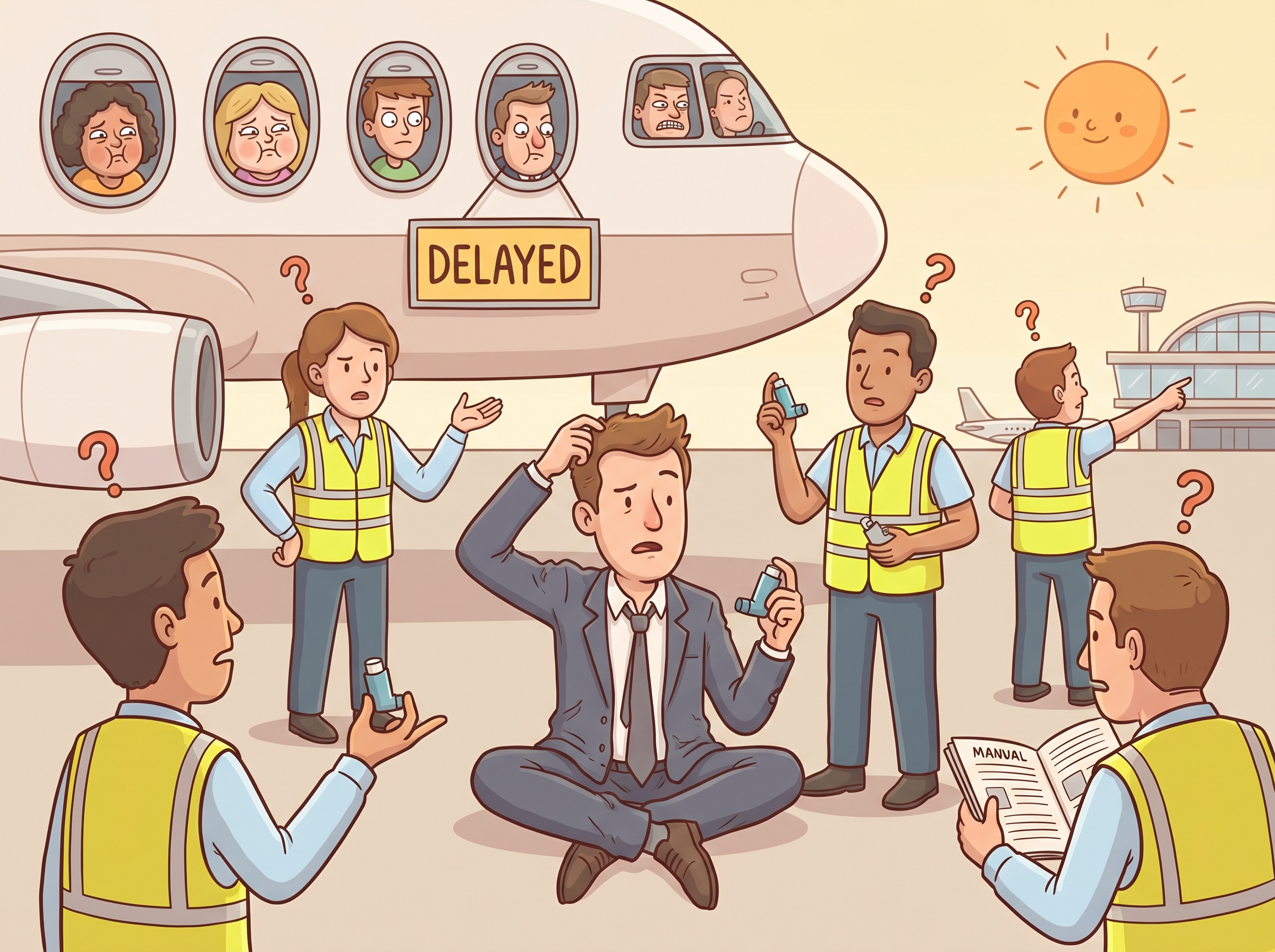
I did not have any real frame of reference for it. I was headed into Des Moines, Iowa, for a speaking engagement. We were landing. We were at about 3,500 feet when it felt like someone shot me straight through the chest with an arrow and it had come out my back. It hurt. I mean really hurt. I was in the back of the plane, and a stewardess was in a jump seat next to me. I told her I had chest pains. She then asked me, “What kind of chest pains?” In retrospect, it does cause me to wonder: are there different kinds of chest pains you would tell a stewardess about? Purple chest pains, perhaps? Maybe they are the “bad soda” kind of chest pains? I felt like mine were in the “land this damn plane now!” category of chest pains. Once we had landed, I ran from the back of the plane to the front of the plane, carrying my briefcase, and down the metal stairs to the tarmac. Why the guy with the heart attack is supposed to run from back to front, carrying his own stuff, and then down the metal staircase is a question I asked myself at the time. (This question has come back to me, as my son is finishing his law degree and we could sue.) Once I got to the tarmac, the early responders in Des Moines (I have politely named them Kookla, Fran, and Ollie) had me sit down. That was the entire extent of their assistance. Wait! That’s not true. Someone kept putting his hand on my
shoulder and telling me to “just breathe.” I felt like I was the sympathetic partner at a Lamaze session. They did take my blood pressure and determine that it was completely abnormal. They took my heart rate, and determined that it was about half my normal rate—not good. They looked at each other and decided I needed an aerosol administration of nitroglycerin to open up my heart valves. Thank God! Some understandable and (what seemed to be appropriate) medical assistance. This would have been encouraging, and probably would have relieved some of the excruciating pain once the aerosol was puffed into my chest orally and made it into my system, except the early responder stuck the aerosol puffer up to my mouth with the open end to the left side of my face. As he pushed down on the aerosol, medicine clouded the evening air instead of going into my mouth and throat. It struck me at that moment that the late night early responder team at this airport probably comprised a luggage loader, a ticket taker, and the person who speaks unintelligibly through the airport speaker system. They each received a $0.50 per hour raise for attending a half-day course in how to escort the feeble from their seats to wheelchairs. I was probably their first medical response case. As I watched the passengers through the circular windows as they deplaned and stared down at me, I was secretly glad that these would not be the first faces I would see on the other side as I entered Heaven. This group looked grumpy and annoyed that their departure was delayed by a man who seemed fine except that he needed some “me time” sitting on the tarmac. They were a little envious that it worked out in getting me out of the plane first. An ambulance arrived. Internally I was saying, “Oh! Now, it is going to be better. The pain will be under control. I won’t feel like I’m going to die. I’m in the hands of medical professionals. I can stop scuba-breathing practice to keep the early responder-man’s hand off my back!” As we were racing away, the two medics asked me, “Which hospital do you want to go to?” There seemed to be no understanding that I was exiting a plane, and might not know how many choices I had and what the hospital names or specialties were as my chest felt like it might ex8
Hea rt Attack & Ot h e r D e s M o i n e s Ni g ht Li fe
plode. They seemed to do a “rock/paper/scissors” contest and picked the one that specialized in immediate heart stent surgeries. Side note: the other hospital did not perform the immediate stent procedure, and they would have had to helicopter me over to the hospital that I ended up at anyway. When the medics found my veins and put the IVs into me for pain, they fist-bumped. This must be a difficult process for them, and they keep score for wins. Possibly it is like baseball, and greater than .250 puts them in the major leagues. When we got to the hospital emergency receiving area, I was surrounded by medical staff. Hope returned to me, knowing that we were at a medical facility and not a Jiffy Lube. This was truly a serious team, and everyone was working on me fast. Someone did an x-ray while I was on the gurney. Someone else pulled out the original IVs and looked at the two medics like the pair had just finished third-grade crayon drawings and should move on to the jungle gym equipment outside. New IVs were put in. I was put on a new gurney. A doctor thankfully called my wife on my cell. Jen groggily answered, and the doctor told her that I had a heart attack on the plane and they were taking me in for a stent. I have epilepsy, and Jen thought I’d had had a seizure, and quite honestly, was not very impressed. She was used to seizures, so this was something with which she was familiar. The doctor conveyed that I’d had a heart attack and asked if I had anything to say to her. I could hear the freaked-out confusion and concern. I mumbled “I love you.” The doctor grabbed the phone, hung up. The doctor was all business. No smiles, romance, or tears. She just hung up the phone and started rolling. In this beehive of activity, no one worked harder than the person trying to get my insurance admittance documents signed. At this point, I was moving down the corridor toward the room where they did heart procedures. I was feeling much less pain, much more naked, and a relatively fuzzy awareness that I was high. Medical shows are not real life. There isn’t a supermodel jumping on top of you, looking into your eyes, and yelling to the team that we have to “tube him.” Instead, I roll into the room where they put stents into your heart. A man behind a control console that reminded me of the Hear t At tack & Ot h e r D e s Mo i nes Ni g ht Li fe
Millennium Falcon says, “Hello, Mr. Searcy. We are going to insert a very small device that will go through… twitch, twitch, roll head… it will go up to your artery, and we will… I wonder why I’m naked? Is that my brother-inlaw over there? That blonde works for me - I’m still naked… We’ll be putting it through either your arm or groin… Who’s shoving stuff up my groin? Was that the insurance guy?… We use a metal stent, some medical reasons but that has drawbacks. Like rust? How would I know? Do I have a choice?… Do you see on those two large screens above you right there? What the hell are you asking me to see? I never knew the gender of my three kids when they did sonograms and I was sober. Here it is… you’re lucky, you see… wait, I still don’t see, is this when I make a choice? What about the groin thing? Did I choose on that one? …the balloon inflates and then it leaves the metal stent…never heard of that, balloon and then car or any other metal thing… there we are, all done. When you are in cardiac recovery, the distance from the end of your bed to the nurse’s station is about an airplane aisle and the staff is just as friendly. I was a midnight customer, so I received the “press the red button if you need anything” response of a nurse looking up at me with a loud call of, “What?” when I pressed it. I wasn’t looking for a long visit in the hospital, but I had expected a few days because of that term “heart attack.” The term had always conjured a picture that this was a big deal requiring doctor’s care, long hospitalization, and a thorough exit procedure. I was wrong. They could not wait to throw me out of the cardiac unit. I’m serious. Post-op and in my cardiac recovery room, the nurse told me, “We have half of our rooms available, and we are full, because we are revamping the others. Once they are revamped, we’ll use those and then revamp these. You’re lucky, you got the last bed.” I was under observation the next day. If you have ever spent time overnight in a hospital, you will recognize that this means every two hours, someone comes in, wakes you up, asks your name and birthdate (lots of body snatching, must be careful), takes your vital signs, asks you if you need anything as they leave and then tells you to “get some sleep.” Observation is a form of CIA disorientation training. In my case, with a brand new stent and little sleep, the following morning they wheeled me out to the car that Jen and my brother Tim had driven
Hea r t At tack & Ot h e r D e s M o i n e s Ni g ht Li fe
over from Indianapolis. The staff practically threw me into the backseat. There was a packet of “Things you should do. Read it on your way home,” and unceremoniously I was discharged. It is now my belief that medical issues will be handled on a drive-through basis in the future. My mom asked me, “What did you learn from this?” I felt like she was talking to me when I was nine and the bag of leaves I was packing in the fall had just broken open, spilling leaves everywhere. Of course, everything (this included) was my fault. The benefit of Catholic guilt is… Sorry, my pen must have run out of ink there. I guess the benefit of Catholic guilt just causes pens to run out of ink… Before the heart attack, I had run a half-marathon about three months earlier and a marathon in the last nine months. I never smoked. I didn’t drink. I wasn’t overweight. I worked out regularly. I had fine numbers in all of the numbers they measure. I was not a heart attack candidate! When I talked to the doctors, and they did the inventory of all of the causes and data, and I asked why I had a heart attack, their answer was “bad luck.” What?! Bad luck is a Las Vegas turn, not a heart attack term. But I knew why. I had chosen this heart attack. I had traded for this heart attack. Winning at work was what I had traded. Jobs are a terrible trade, even if you love what you do, which I always did. It’s true. Whenever anyone asked me how my job was or did I like what I did, my honest and loud answer was, “YES!” It was. I know why now. It fed me. I felt good about me. I knew I was good at it. No, I was great at it. Every job I had there was a scorecard, and I crushed that scorecard. I am good at strategy. I am good at motivating other people, organizing approaches, finding weaknesses, and getting performance. Once I knew what the true valued success was for my boss and the company, my team and I would crush the opponent. The opponent could be another internal team, an outside competitor, or an existing record. It did not matter. OK, a couple years before the heart attack, I had slowed down some. I had changed some of my habits I had developed. So I wasn’t exactly a forest fire of insanely bad life choices at this point—think of me more like a bonfire—but I believe that the body keeps score and that two years
Hea r t At tack & Ot h e r D e s M oi nes Ni g ht Li fe
of good doesn’t fix thirty of bad. I wish it did, because that would make it easier to fix my sleep patterns. After the heart attack, I was weak. I had lost twenty pounds. I could not walk to the end of the street. I needed people to walk with me and I needed to nap—a lot. The body now made the trade for me. My challenge with jobs as a lifetime career choice is that you do not have control of your time or your earnings. More is not my point. Choice is my point. When someone else dictates the “where, what, and how” in your career, that is close to enslavement. When they dictate for how much, then you are a ditch-digger, and all that is being argued is price. HOW DO YOU GET AWAY FROM A JOB?
1 Develop a capability that people will pay for its value at your non-timebased price 2 Carry no debt and have margin—always 3 Hold your time precious 4 Know what you are trading your precious time for that is not work 5 Be known